The crape myrtle has been a longtime favorite among gardeners in the South for the tree’s resilience, simplicity in maintenance, and beauty while it blooms in the summer.
However, a parasite has begun to ravage the trendy tree, and bark scale has set in. The pests look like white patches across the bark and host a fungus that is fundamental in the growth of black mold.
The nonnative pest, which originally came from China, has begun to spread throughout Mississippi. It is rendering these once favorites obsolete among gardeners and landscape architects alike.
“Crape myrtles are showing more and more sign of disease. You’ll notice a lot of them are black and have a sooty mold-type substance all over them,” said Brantley Snipes, executive director of Main Street Greenwood and a landscape architect. “They’ve been over-planted and are showing resistance to traditional methods of treatment.”
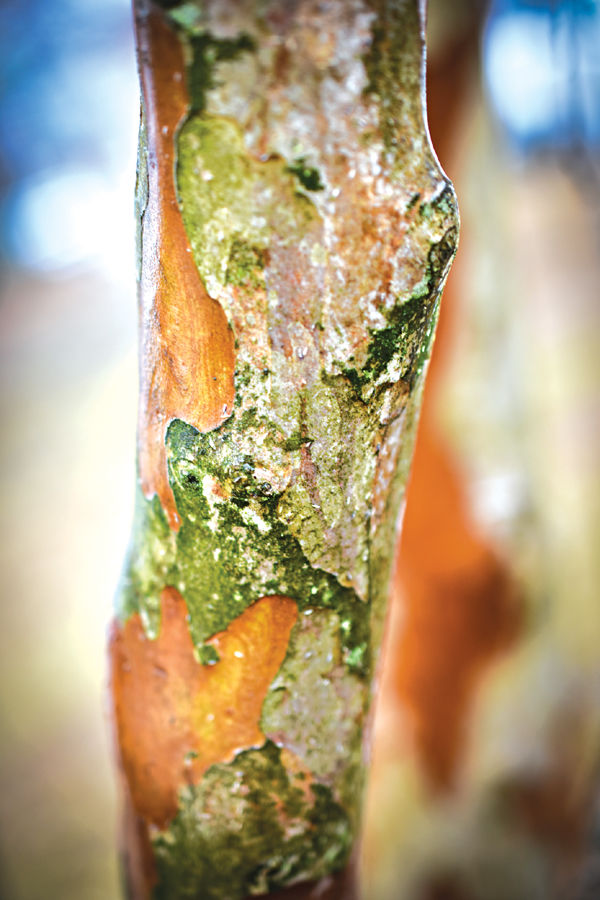 The bark on a crape myrtle near the Yazoo River is shown covered with what could be the beginning symptoms of bark scale, a pest destroying what was once the go-to summertime tree for gardeners.
Not all hope is lost, though; there are new alternatives to the crape myrtle that will leave any gardener’s yard looking fresh for the summer.
“Some great substitutions that I use are Sweetbay magnolias, redbuds, chaste trees, grancy graybeards or Japanese magnolias,” Snipes said.
Lark Brown of Schlater, a member of the Greenwood Garden Club, agreed that smaller trees, such as chaste trees and redbuds, would be good summer substitutes for the dying crape myrtle.
People are also beginning to shift to lower-maintenence gardening for the new season. “I would say low maintenance is the trend we are implementing in most all of my designs,” Snipes said.
“There are so many new dwarf and lower-growing varieties of plants on the market that don’t require pruning and excessive care,” she added.
Felder Rushing, a gardener and columnist, agreed that lower-maintenance plants are the ideal substitutions.
He said the replacements he uses in his garden “include those that are easy to grow, very durable, need little or no care and are generally available through garden centers.”
Asked about low-maintenance garden options, Brown laughed and said, “There’s no such thing.”
Snipes suggested that gardeners prepare for spring by planting liriope, or monkey grass.
•Contact Kerrigan Herret at 581-7233 or kherret@gwcommonwealth.com.


