The Leflore County Board of Supervisors is working on a solution to help homeowners whose houses were damaged in last month’s flash flood should the county not be eligible for federal assistance.
Meanwhile, Leflore residents whose lives were upended by the flooding continue to express disappointment that no immediate aid is available yet for them to address the damages to their homes.
Reginald Moore, the District 2 supervisor and board president, said Friday that the county has reached a verbal agreement with Holmes County’s long-term recovery committee to form a partnership that will allow Leflore County to receive funds for home repairs and renovations necessitated by the flooding.
A county long-term recovery committee is composed of various community organizations that work together to facilitate disaster relief. It is conducted through an agreement with the Mississippi Emergency Management Agency (MEMA).
Once a recovery committee is established, a county is able to receive up to $250,000, in $50,000 increments, from the state’s disaster relief fund to assist homeowners with materials needed for home repairs.
Funding from the program, which can be applied for only one disaster per year and cannot be used to address disasters prior to the creation of the recovery committee, is specifically designated for communities that do not qualify for the Federal Emergency Management Agency’s (FEMA) individual assistance program.
The Board of Supervisors voted Tuesday to establish a recovery committee for the county, Moore said Friday, although this will not apply to last month’s disaster.
In order to get financial aid much sooner, Leflore County is establishing a temporary partnership with Holmes County’s recovery committee. The Holmes County committee will act as the fiscal agent on behalf of Leflore County to receive funds from the state, Moore explained.
The county would get these funds only if Mississippi isn’t eligible to receive FEMA’s individual assistance to address last month’s flash flooding.
Individual assistance from FEMA, according to the agency, can include grants for rental and lodging expenses, emergency home repairs as well as personal property losses, among other uses.
Federal assistance is not guaranteed, however, and counties must have a significant number of “major” or “destroyed” damaged homes, as followed by the guidelines of FEMA’s preliminary damage assessment guide, in order to qualify.
Of the approximately 170 homes in Leflore County that have been assessed for flood damage, Randle said that more than 100 have been listed as having an “affected” degree of damage and about 40 have been listed as having a “minor” degree of damage. Only about five homes have been listed as having “major” damage, and no homes have been listed as “destroyed,” he said.
Randle said he was told that at least 50 to 100 homes in the county need to be identified as having a “major” degree of damage or as having been “destroyed” in order for it to constitute a significant number.
The county’s damage assessments are currently being validated by MEMA as well as households in other counties that were damaged by the flooding, including those in Bolivar, Carroll and Sunflower counties.
If Leflore County does not receive federal assistance, the county would then be eligible to receive state funds to address repairs, but only through a long-term recovery committee or a temporary partnership with a county that has a long-term recovery committee.
Moore said he could not provide a turnaround time for when Leflore County would get state funds but did say that the county “is working swiftly as possible.”
Leflore County residents have expressed anger and bewilderment at what they see as a cumbersome process required to receive critical aid to address damages to their homes, as discussed during a flood forum held Thursday evening at the Leflore County Civic Center.
Most of the homeowners did not have flood insurance, and some reported they previously were advised they weren’t required to have it.
Residents were able to receive some assistance for food, clothing and cleaning supplies during and immediately following the flooding thanks to a patchwork coalition of volunteers in the community and from organizations such as the Red Cross and Central Mississippi Inc. (CMI). However, many residents lamented at the forum that they are having trouble securing funding for continued hotel stays, since some homes are uninhabitable due to mold growth, or to purchase building materials to fix their homes.
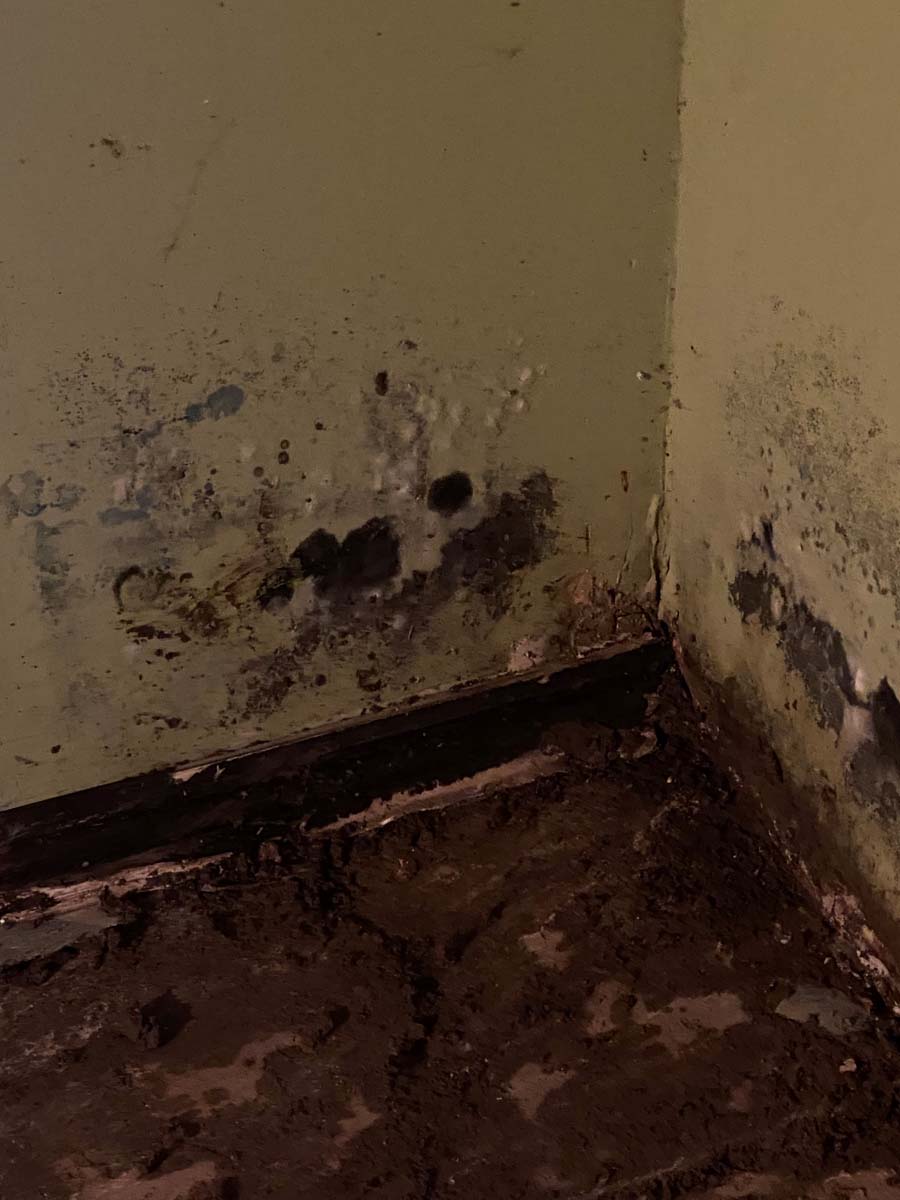 The formation of mold in the Glendale subdivision residence of Earline Davis is an example of the post-flooding problems confronting residents.
“A lot of homes may have not met the FEMA guidelines based on where we need to get their assistance, but our homes were contaminated also by the sewer water because manholes came out,” said Carla Williams, a resident of the Glendale subdivision for more than 20 years who spoke at Thursday’s forum.
“We’re not just throwing our stuff away just to be throwing it away. It’s contaminated, and they didn’t look at that. And that makes me real upset that you can say this is minor damage but our whole homes are contaminated and they didn’t think to put that assessment that we lost our stuff because of contamination.”
Williams said she has not been able to live in her home since she evacuated it early June 11.
Present at the forum were about 100 residents, many from the Glendale subdivision, which was affected by the flooding, and representatives from CMI and Catholic Charities, a Jackson non-profit, who detailed what assistance they could provide.
Dr. Pamela Gary, executive director of CMI, said it has received a $20,000 disaster grant that can be used for hotel stays between five to 10 days, as well as a month’s worth of rent or a home deposit.
To receive this assistance, however, applicants must submit a letter they received from the county’s emergency management agency saying they were affected by the flooding, Gary said.
In many ways, the topic of Thursday’s forum centered on how Leflore County could mitigate the impact of future disasters. Warren Miller, representing the Mississippi Voluntary Organization Active in Disaster, and Moore discussed efforts to create a long-term recovery committee.
Earline Davis, a resident of the Glendale subdivision who was in attendance at Thursday’s forum, said Friday that no immediate assistance has been provided for residents to address damages to their homes.
Like others in the subdivision, Davis evacuated her residence June 11 when she found water seeping inside her home.
She has since moved back in and has paid about $1,400 out of her own pocket to replace her moldy walls with new ones. Even with the money she has spent, she said mold is growing in some areas of the home, though she hopes to have it removed later in the week.
More work still must be done at her home, including a $1,800 estimate to replace the tile flooring, she said.
“I’m not working, and to go into my little savings I have, it’s pretty much eating all that up,” Davis said, who is retired.
- Contact Gerard Edic at 581-7239 or gedic@gwcommonwealth.com.


