Biking enthusiast Richard Beattie didn’t know much about the greatest American cyclist from the turn of the 20th century until recently.
Beattie had heard of Major Taylor only because of the cycling clubs named after him that participate annually in Bikes, Blues & Bayous, the ride that Beattie helped found in 2008 and for which he still serves as a principal organizer.
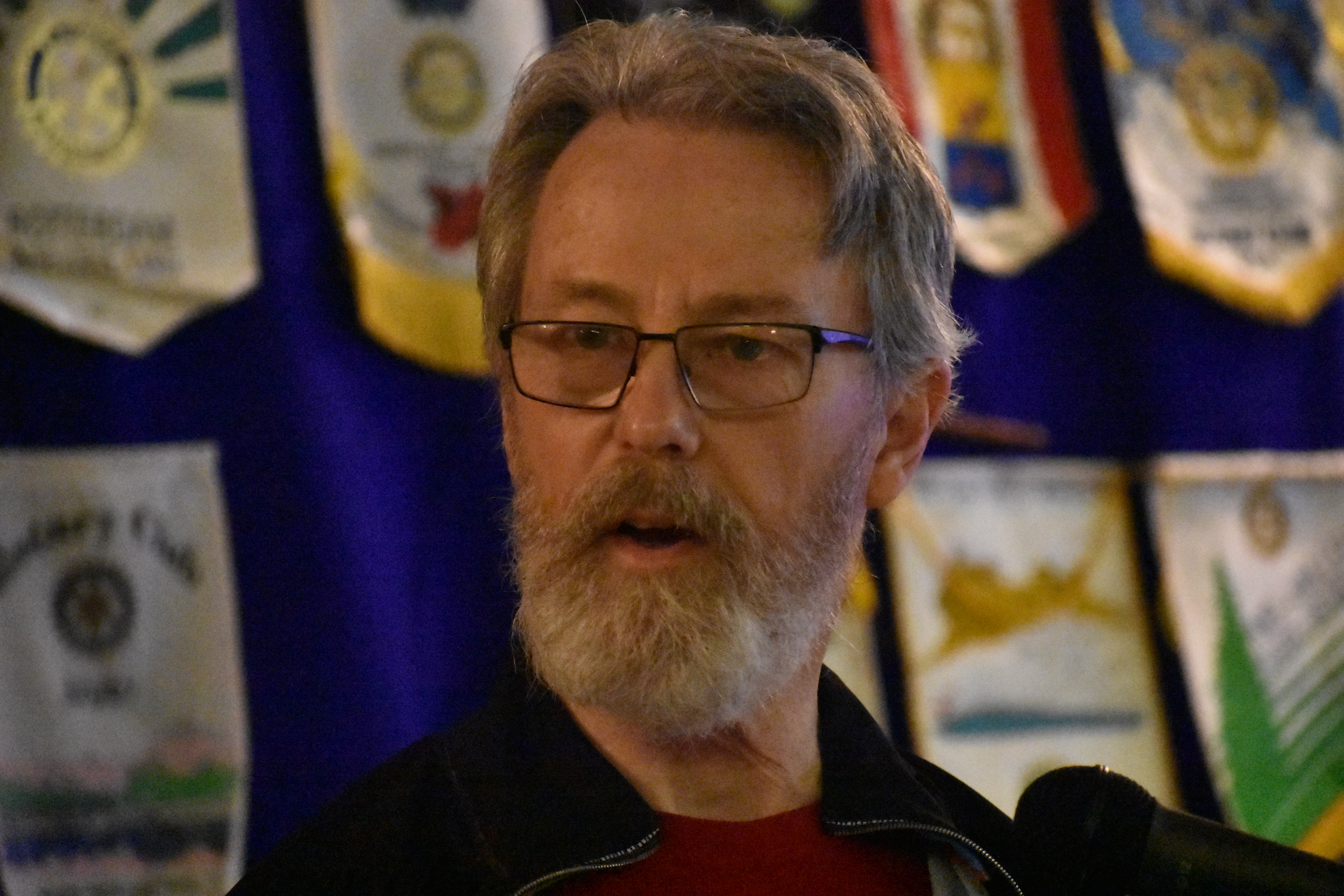 Richard Beattie
In recent months, though, Beattie has been reading up on Taylor, who will be a special point of focus for the 15th annual ride, set for Aug. 6.
“He’s an incredible person,” Beattie said of Taylor, as he shared with the Greenwood Rotary Club Tuesday the plans for this year’s event, which is sponsored by the Greenwood-Leflore County Chamber of Commerce.
Beattie said there was about a 15-year period during the latter part of the 19th century — the so-called “Gilded Age” — when bicycling was all the rage.
The two-wheeled mode of transportation grew in popularity as the country begin to transition from horses to automobiles as the primary means of getting around. In 1896, according to Beattie, Americans owned 4 million bicycles compared to just 300 automobiles.
Bicycle racing, he said, was a more popular spectator sport than baseball, boxing and horse racing, drawing crowds of tens of thousands to watch the helmetless cyclists speed around tracks at up to 40 miles per hour on bikes that had no brakes.
“They had to keep pedaling or else fall over. When they had a crash, it was something to see. ... It was a very dangerous sport,” Beattie said.
During that era, Taylor burst onto the scene, his success all the more noteworthy because of the racism the Black cyclist encountered.
Born in Indianapolis, Taylor moved as a teenager to Worcester, Massachusetts, which, Beattie said, was more racially tolerant.
In 1899, Taylor became the first Black world champion in cycling, winning an international competition in Canada. The following year, he won a U.S. sprint cycling national championship. He would become one of the most chronicled Black men of his time.
A devout Baptist, Taylor refused to race on Sundays for religious reasons. In 1899, a newspaper in Worcester reported that he turned down an opportunity to make $15,000 (the equivalent of about a half-million dollars today) at a cycling event in France because of his personal prohibition against racing on the Sabbath.
Despite the racial prejudice he encountered from inside and outside his sport, Taylor steadfastly kept his composure, according to Beattie. “For all the animosity and hate that he put up with, he did not lash out at his opponents. He took his religion very seriously.”
Cycling fans and others will be able to learn more about Taylor on the eve of Bikes, Blues & Bayous, Mississippi’s largest ride with an annual draw of a thousand cyclists.
On Aug. 5, from 5 to 6:30 p.m., Michael Kranish, an investigative reporter for the Washington Post, will be at Turnrow Books to talk about his 2019 book on Taylor, “The World’s Fastest Man.”
In 2021, almost 55 members from the Memphis, Jackson and Little Rock, Arkansas, chapters of the Major Taylor Cycling Club participated in Greenwood’s biking event. Beattie said he hopes to draw more of the club members from chapters around the country this year.
“That’s a bigger reservoir of potential visitors than any we can put our hands on,” he said.
- Contact Tim Kalich at 662-581-7243 or tkalich@gwcommonwealth.com.


