Whether you add them to a salad, create the classic sandwich with mayonnaise, salt and pepper on white bread or a delicious BLT or eat them straight from the vine, tomatoes are the quintessential summertime treat in the Deep South.
When the tasty red fruit — or vegetable? — begins to ripen in mid-June, it heralds the hot, humid summer months, and farmers markets are stocked with different varieties that can be consumed fresh, cooked or canned for later.
For many, growing a tomato can be just as satisfying an experience as eating one.
“It’s something that’s very rewarding to grow,” said Barry Corley, who has been growing greenhouse tomatoes since 2003. “You’re growing something for people to eat, and tomatoes have good nutritional value, antioxidants, lycopene. Tomatoes are just good for you.”
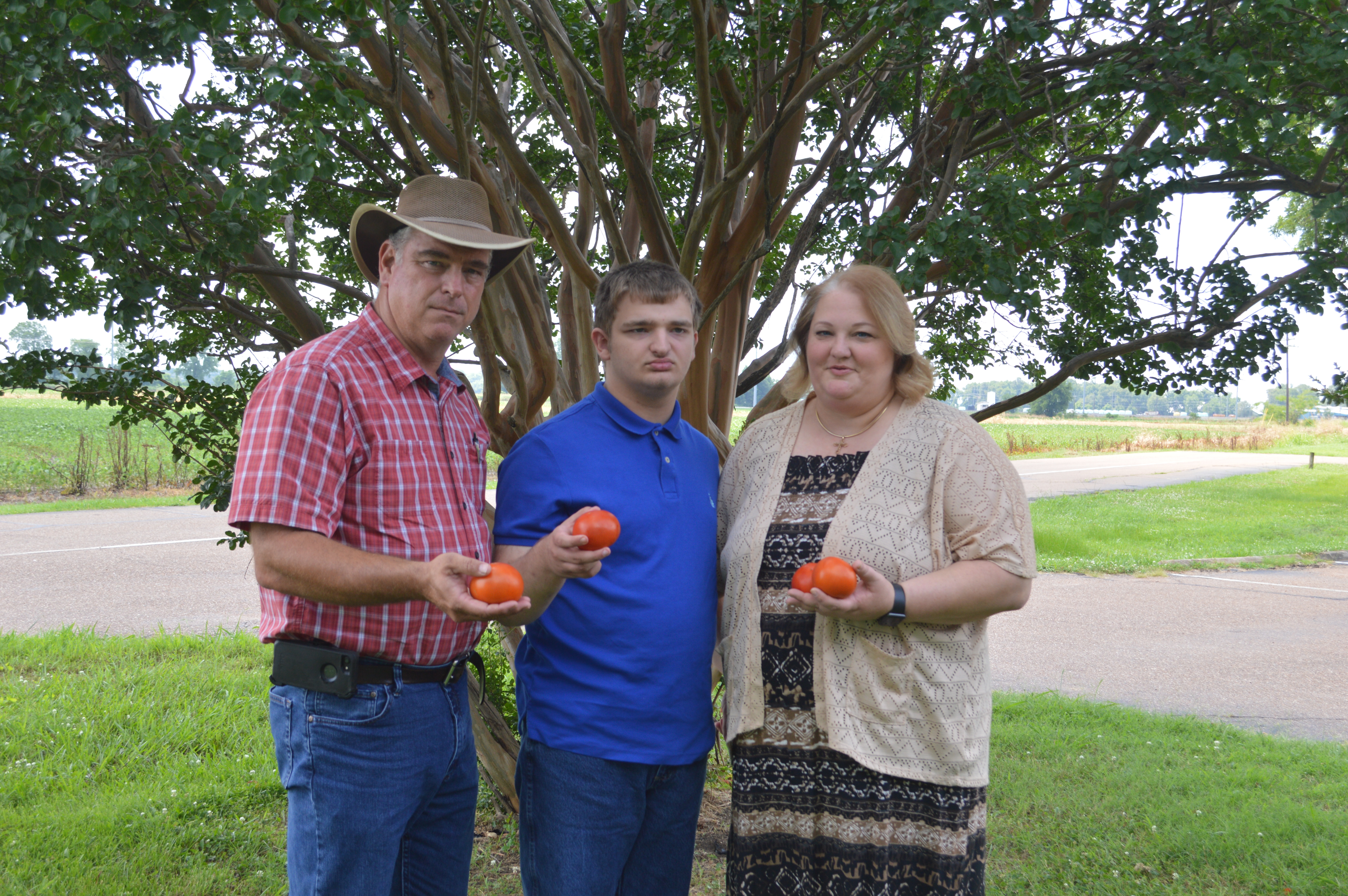 From left are Barry, Walker and Stephanie Corley. The Corley family grows greenhouse tomatoes at their home in Holcomb.
Corley, an agriculture teacher at Mississippi Delta Community College, grows tomatoes at his Holcomb home with his wife, Stephanie, and his son, Walker. He sells them to customers from Grenada to Belzoni and at the Downtown Greenwood Farmers Market on Saturdays. His greenhouse tomato garden season is from September to July.
“We are dealing mostly with the wintertime market, so we are on the tail-end of our crop right now,” Corley said. “With a greenhouse, you can totally control the environment. Of course, you have to heat the greenhouse during the wintertime, and that’s one of our biggest expenses.”
At the start of his growing season, he had 496 plants, which are housed in the 2,700-square-foot greenhouse. The tomatoes he grows are a special variety that grow well in a greenhouse environment.
Corley, however, said he deals with many of the same challenges, such as insects and plant disease, with his tomatoes as backyard tomato gardeners.
“Tomatoes can be the most temperamental yet one of the strongest plants,” he said. “If you can get them off and growing good, they can be a tough plant. Yet, the least little thing can cause problems.”
Corley said tomatoes need daily nurturing, which includes pruning regularly and keeping a watch for insects and disease.
“It’s not a crop you can plant, turn loose and let it grow,” he said.
Watering tomatoes can be tricky.
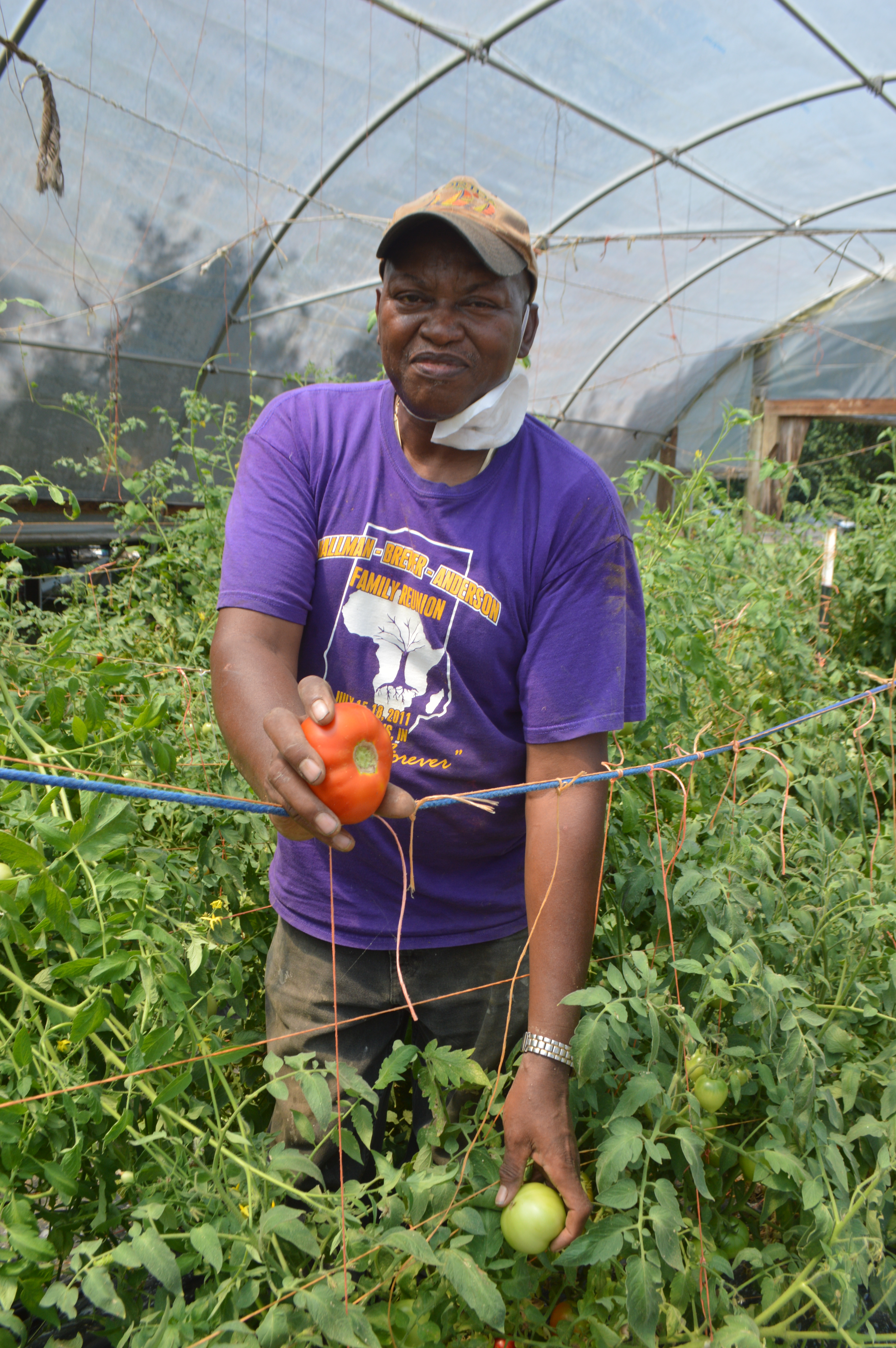 James Brewer
“You have to keep the right amount of water they need to keep them healthy,” said James Brewer, who is growing about 75 to 100 tomato plants this summer and selling produce at the Downtown Greenwood Farmers Market. “They are pretty easy to grow as long as you keep the right amount of water. If you over-water, the leaves might start browning. If you under-water, the leaves start to droop.”
Tomatoes should not be watered daily but rather every other day or as needed.
“Consistent watering,” said Beth Stevens, who has been growing heirloom tomatoes with her husband, Glen, for about 14 years. “Don’t let your garden go for a week without watering.”
Those growing tomatoes should also check the weather forecast before watering plants, especially if tomatoes are beginning to ripen.
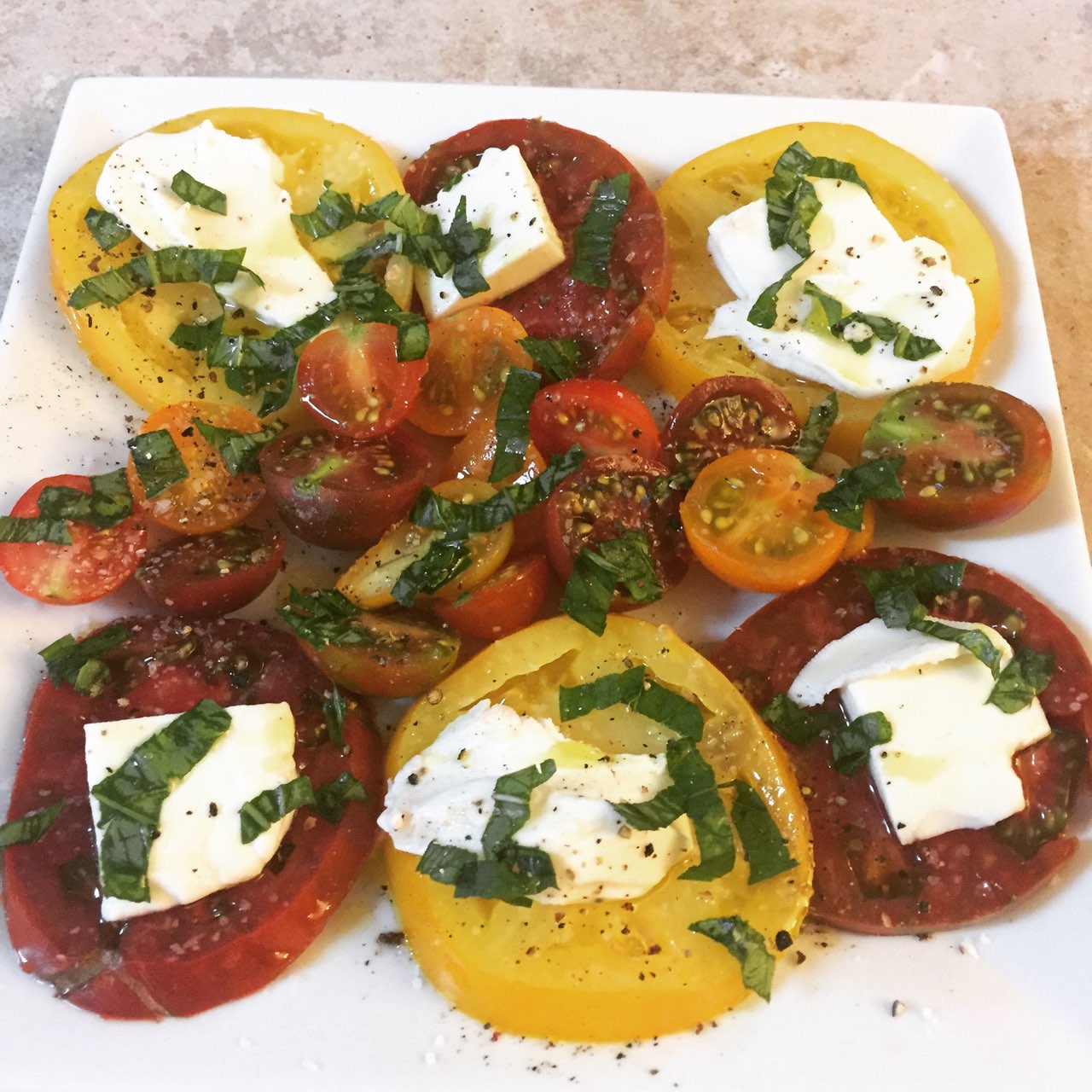 Make a Caprese salad with fresh tomatoes, mozzarella, chopped basil and a drizzle of Tuscan herb olive oil. Beth Stevens uses heirloom tomatoes from her garden.
“A lot of times, we have tomatoes that are starting to get ripe on the vine, and all of a sudden we will get a big rain — and we haven’t had rain in three or four weeks,” said Stevens. “The water (from the rain) goes through the roots, up to the plant, and it gets into the fruit and expands the fruit, and that’s what causes it to crack.”
The Stevenses manage Greenwood’s farmers market and sell their heirloom tomatoes among other items there.
Stevens said, however, a crack in a tomato is not necessarily a flaw.
“Cracks are a natural thing, and heirloom tomatoes are real susceptible to cracks,” she said. “Don’t let a crack stop you from buying an heirloom tomato, because you are giving up a whole lot if you leave it sitting on the table.”
Another key to growing a bountiful tomato plant has to do with the soil.
“Keep the soil healthy, and have the soil tested,” said Brewer, who grows varieties of tomatoes called Big Boys, Better Boys and Celebrities.
Corley recommends getting soil samples pulled and having them tested through the Mississippi State University Extension Service.
“You want to plant tomatoes in good, well-drained soil and have the nutrients that you need,” he said.
The Extension suggests picking a location to plant tomatoes that does not hold water and receives as much direct sunlight as possible. Make sure the soil pH is above 6.0 and adequate nutrients are present. Add compost, aged manure, or other organic matter to the planting area if it is very sandy. Tomatoes need a well-drained root zone.
“If it’s a lower pH, you can always add things to it, and if it’s a higher pH, you can do things to neutralize it,” said Stevens. “The plants just grow better when the soil is right.”
While many tomato plants are currently producing flowers and have vines heavy with green tomatoes beginning to ripen, the production of the fruit may taper off in July. That, however, does not mean the plant is finished producing.
“If it gets above 95 degrees, tomato blooms won’t set and won’t pollenate like they should,” said Corley. “That’s the reason that a lot of times with garden tomatoes, you’ll see the crop play out around the first part of July to the first part of August, but the plants will still be healthy and alive. A lot of times, the plants will pick up a second wind when you get into your cooler temperatures in the fall.”
Corley said anyone who enjoys watching something should plant tomatoes.
“You will see your quickest turnaround,” he said. “From the time you have a bloom, you’ll be picking tomatoes in about six weeks. ... It’s something you can do and get kids involved.”
Stevens said it’s neat — although time-consuming — to watch tomato plants grow from small seeds to large plants filled with fruit.
“There’s just something really satisfying about the whole process,” she said. “There’s just a really neat sense of satisfaction knowing you took this little, tiny seed about the size of a pinhead, and you grew it into something that is really good to eat and really pretty.”
• Contact Ruthie Robison at 581-7233 or rrobison@gwcommonwealth.com.


