The theme of the Museum of the Mississippi Delta’s new exhibit is self-taught folk art.
“A Journey in Folk Art,” which recently opened, features two Mississippi natives and their different perspectives of the rural South, which is shown through their artwork.
The show highlights the work of Mississippi folk artists O.W. “Pappy” Kitchens, born in Crystal Springs, and Dr. Lisa Cain, a Canton native.
Because of the coronavirus pandemic, the museum did not hold an opening reception. The exhibit is currently open and will run through Aug. 29.
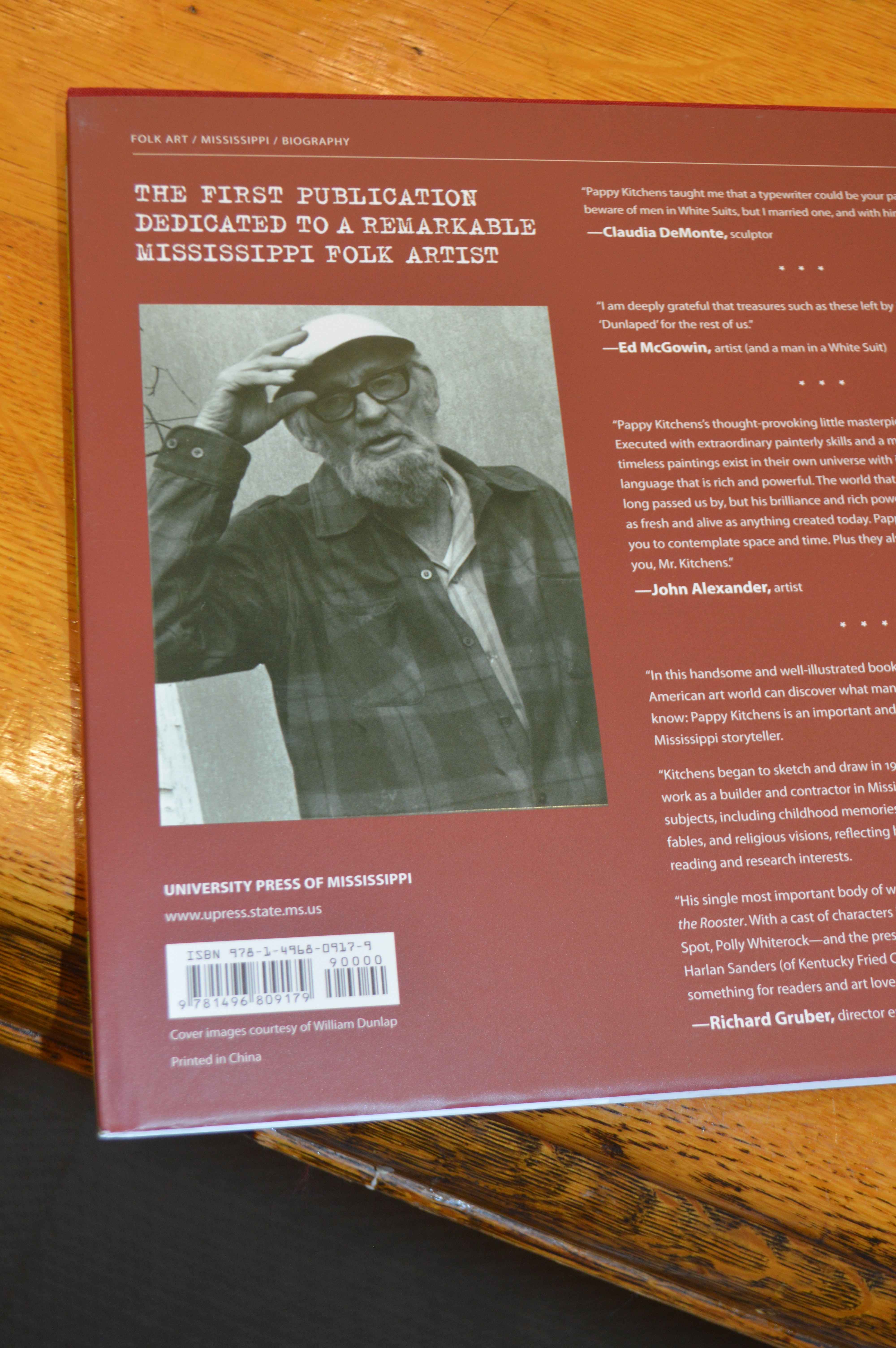 Kitchens
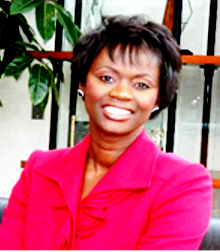 Cain
Cain
“We’re really happy we’re able to give people something to do in an environment hopefully they feel safe and comfortable in and can come enjoy something with their family,” said Katie Mills, the museum’s executive director. “The way the museum is set up, it is very easy to social distance.”
The museum is open from 10 a.m. to 3 p.m. Monday through Saturday, with a limit of 10 visitors at a time and with other COVID-19 guidelines.
Although the exhibit most likely will not get the same amount of foot traffic as one held before the pandemic, Mills said the museum is glad to offer it to the community during a time when people are wanting to do something outside of their homes.
“There are not many places you can go and enjoy something like this in this area,” she said. “We’re just glad we were able to get it up, and we really wanted to do it because we wanted to give people something to do.”
Mills said she thinks those who attend the exhibit will enjoy it.
“I like the contrast of it being a white man and an African American woman depicting life in the rural South,” she said. “I think it’s neat to look at those two perspectives and look at things that overlap and the things that are different.”
Cain now resides in Austin, Texas, where she is the associate dean of Professional Development and Faculty Affairs, a professor in the Department of Diagnostic and Biomedical Sciences at the University of Texas Health Sciences Center and is also an adjunct professor in the Department of Neurobiology and Anatomy at the McGovern Medical School at the University of Texas.
“She is just a pleasure,” said Mills. “She is just as bright and cheery and sweet as all of (her) paintings.”
Her mixed media and acrylic pieces have been exhibited in galleries and art shows throughout the country and featured in magazines, such as Southern Living and Texas Monthly. Her work has also been used on the sets of Netflix shows “Trial and Error” and “The Family Reunion.” She’s also been included in the book “Self-Taught, Outsider and Folk Art: A Guide to American Artists Locations and Resources” by Betty-Carol Sellen and has published her own book, “Art of the Spirit.”
“She’s really proud of growing up in the rural South,” said Mills. “A lot of people aren’t, but she is and really credits where she grew up with her success and her parents being educators and her community, her church community, everything making her the woman who she is today.”
On her website, lisacain.org, Cain writes that her art is “derived from my memories, my experience and my perception of my hometown community as a child. My art is from my spirit. I can only paint what I feel. I am a memory painter.”
She hopes that her art reminds those who view it of times that were simple but beautiful. “Through my art, I tell stories and paint a picture of the rural South. To me the most important components of my art are the stories that I tell.”
Cain’s art pairs well with Kitchens’ “The Saga of Red Eye the Rooster,” a fable that follows the life of a bird. Red Eye’s life is illustrated on 60 panels, each measuring 15 inches square and composed of mixed materials on paper. The panels are separated into three groups of 20.
“The Saga of Red Eye the Rooster,” considered Kitchens’ magnum opus, follows Red Eye from foundling to funeral. His human-like behavior leads to conflicts, as he encounters most of the Seven Deadly Sins.
“Each panel tells you the story,” said Mills.
Even Col. Sanders of Kentucky Fried Chicken makes an appearance, she added.
Kitchens did not begin painting until the age of 67. His art comes from the oral tradition of storytelling he learned while growing up. Kitchens once said, “I paint about folks, what folks see and what folks do.”
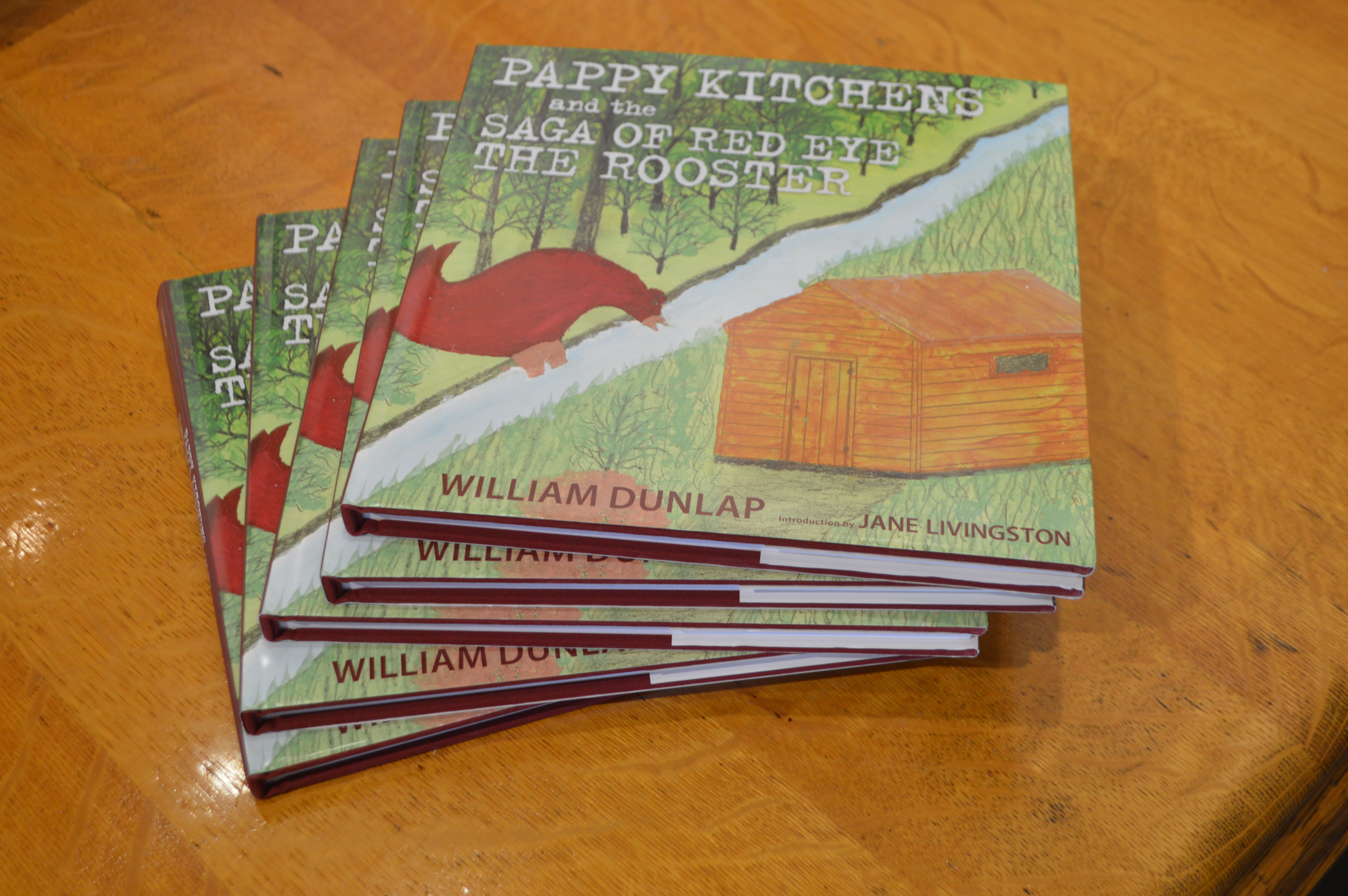 William Dunlap’s recently published book, “Pappy Kitchens and the Saga of Red Eye the Rooster,” is about the late artist who was Dunlap’s father-in-law.
His work is presented in conjunction with the recently released book “Pappy Kitchens and the Saga of Red Eye the Rooster” by William Dunlap, a renowned artist, author and Mississippi native. Dunlap has said two of his best pieces of work are in Greenwood — “Landscape Askew: Delta Dog Trot,” which hangs prominently on the wall of The Alluvian and “Flat Out Flyway,” which hangs above the reception desk in the museum’s lobby.
“He is a friend of the museum, and he really goes above and beyond for us,” said Mills, adding he was disappointed about not being able to attend the exhibit because of the pandemic.
Dunlap is a one-time son-in-law of Kitchens, who died in 1986.
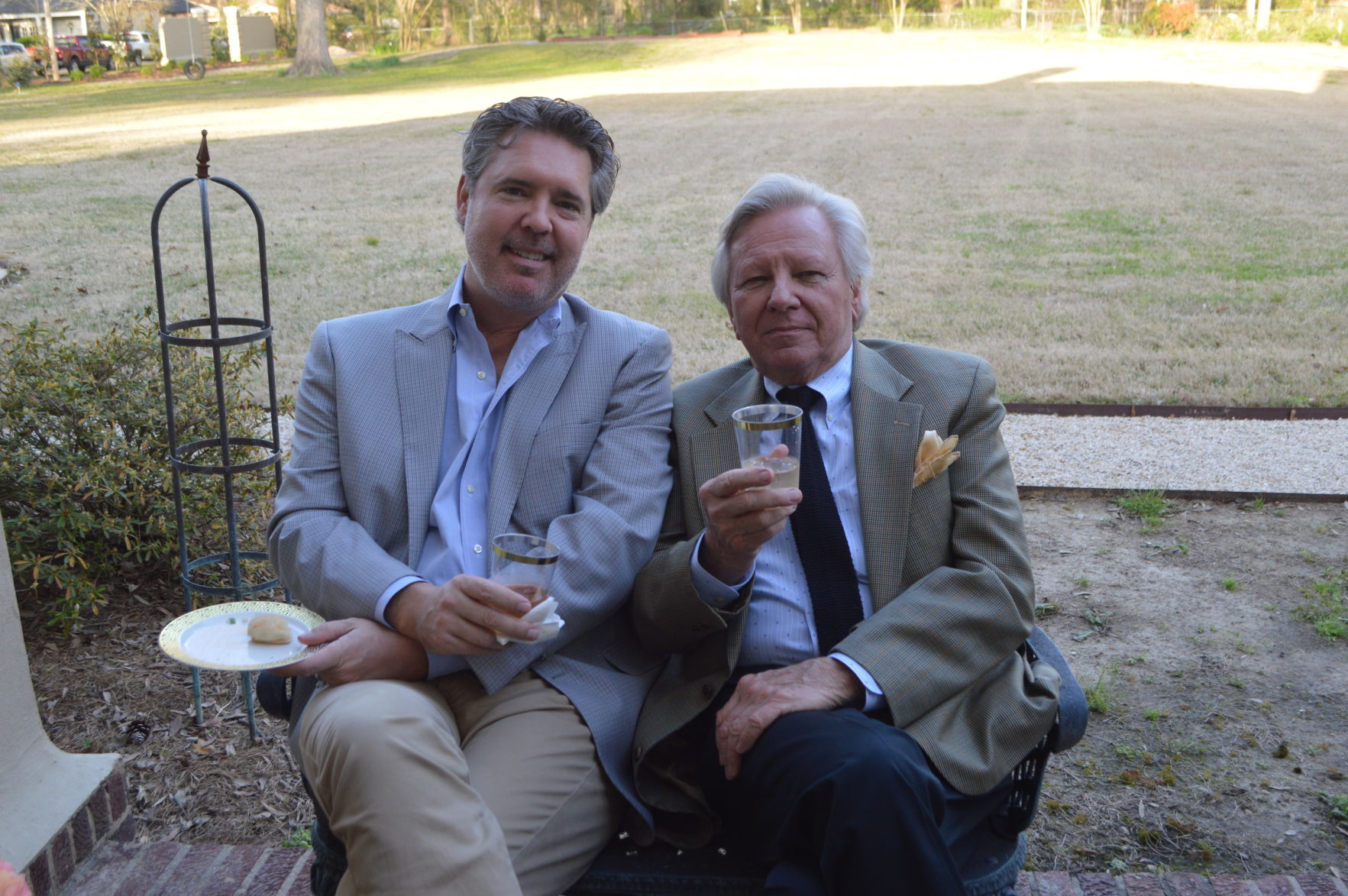 Dunlap
“The book is about Pappy Kitchens and does tell the story of Red Eye the rooster,” said Mills.
The Museum of the Mississippi Delta has signed copies of Dunlap’s book available for purchase.
The exhibit also features 16 other extra panels of Kitchens’ artwork that include humorous short stories to go with the art.
Coming up at the Museum of the Mississippi Delta:
• After the current show, the museum will have an exhibit in September featuring the work of Cleveland-based photographer and educator Will Jacks, who recently published with writer Boyce Upholt “Po’ Monkey’s: Portrait of a Juke Joint.”
• In October, the museum is preparing an exhibit of the work of Lalla Walker Lewis, who was a Greenwood artist. Featured pieces will include Walker’s murals from the old Greenwood-Leflore Public Library.
“We’re really excited about the murals, because this will be the first time they’ve been displayed since they were taken down and restored,” said Mills.
The museum is also seeking other pieces of Walker’s work to be displayed. Anyone who would like to loan a piece of Walker’s to be exhibited can contact the museum.
“Anybody who has anything, we’d love to display it,” said Mills.
For more information about the exhibit or to loan a piece of Walker’s work to the museum, call 453-0925.
• Contact Ruthie Robison at 581-7235 or rrobison@gwcommonwealth.com.


